Every CX team knows the sinking feeling of a complaint coming in. What almost nobody expects is that the complaint can be the beginning of your most loyal customer relationship. That is the service recovery paradox, and it is the subject of this episode of CX Matters.
Michel Stevens has spent fifteen years helping organisations across Europe become more customer-centric, and he has run the numbers on what happens after things break. In this conversation with Bram De Vos he explains the three levels every recovery needs, why almost every company forgets the third one, and what bol.com, a man cave in a shopping mall and a board at the Jumbo exit can teach you about acting on feedback.
What you will take away
- A well-recovered failure can beat a flawless run. In research Michel ran in the financial industry, an incident nobody recovered left NPS around minus 95. A functional fix brought it to about minus 19, still far below the plus 18 starting point. Recovery on all three levels took it to plus 59.
- Recovery has three levels. Fix the thing (functional), restore the sense of fairness with empathy and a little over-delivery (emotional), and show what you changed so it never happens to anyone again (social). Most companies stop at two.
- The social level is the multiplier. Telling customers "here is what we learned and changed" is where the biggest jump in satisfaction happens, and it is the level almost nobody plays on.
- Never break things on purpose. The edge comes from building recovery into how you operate, the way bol.com out-scores Coolblue on satisfaction despite owning far less of its supply chain.
- Speed and communication come before the fix. Once you ask for feedback, the customer assumes you know. Respond within about a day, and if you cannot fix it yet, say what you are going to do.
- Give the frontline some autonomy, one step at a time. The person in the conversation needs room to decide something. No revolution required, just one step more than yesterday.
What a recovery is worth
NPS after something goes wrong, at three levels of recovery. These customers started at +18. Research by CXM Academy in the financial industry.
Jump to a moment
 Michel StevensCX expert & course director
Course director at CXM Academy, partner at goCX and host of the Table 7 podcast. Works with organisations across Europe on customer-centric transformation.
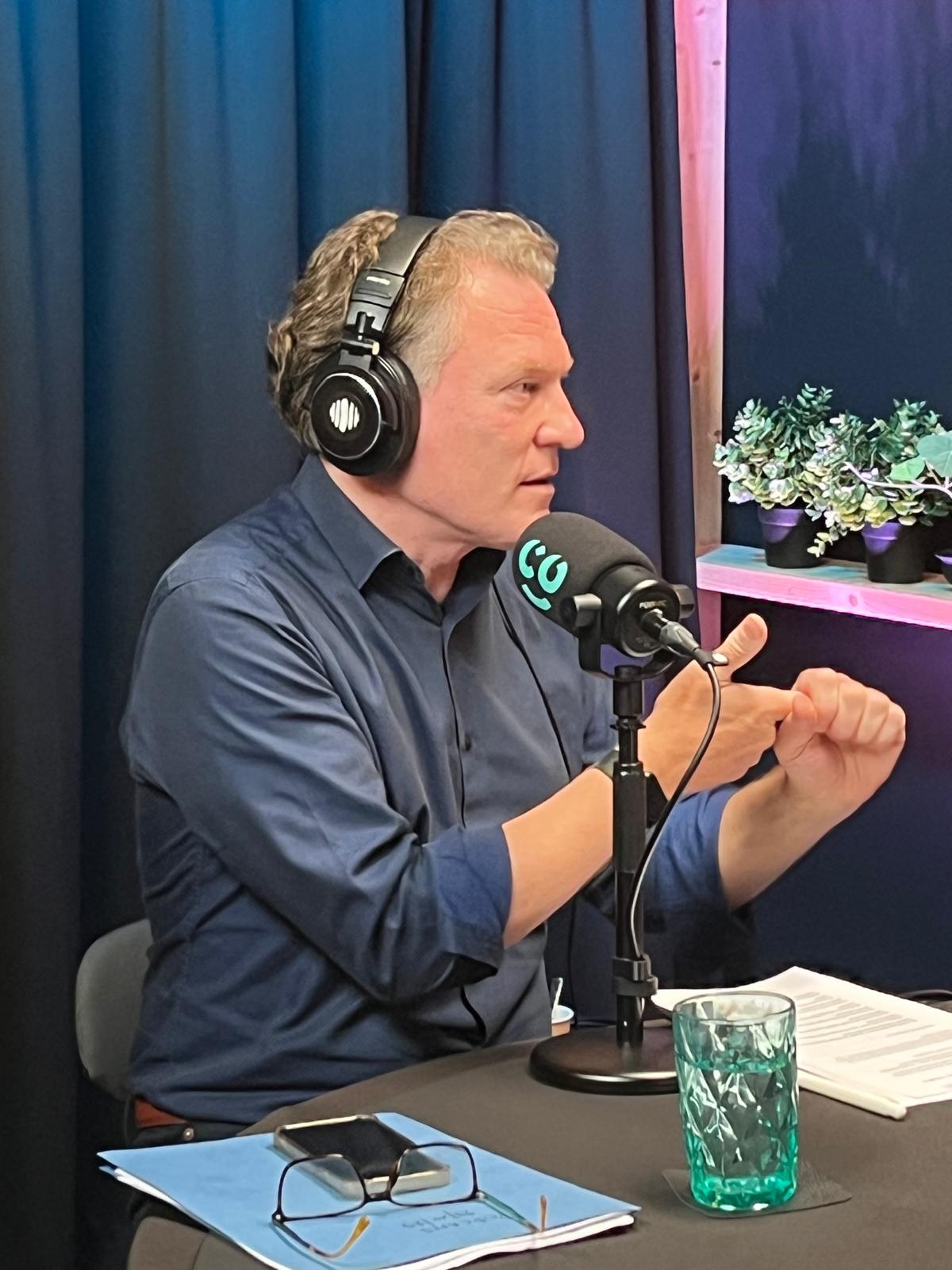 Bram De VosCEO, Hello Customer
Your host of CX Matters, the webinar and podcast series powered by Hello Customer, where every episode looks at one idea: the way you treat your customers shapes the way your business grows.
Meet Michel Stevens
Bram: Hello everyone, and welcome to CX Matters, our webinar series powered by Hello Customer. My name is Bram De Vos and I am your host today. As many of you know, every session we look at one idea: the way you treat your customers shapes the way your business grows. At Hello Customer we help organisations listen to their customers, bring feedback together from surveys, conversations and reviews, and make sense of all of it. Today we are talking about what makes a customer stay and what makes them leave. And to explore that, I am joined by a guest who knows this terrain better than most: Michel Stevens. Michel, welcome.
Michel: Thank you for inviting me, Bram. It's a real pleasure.
Bram: It's good to have you back with us. How do I best introduce you? You are course director at CXM Academy and a partner at goCX, you work with organisations all across Europe on customer-centric transformation, and you host your own podcast, Table 7, which I can highly recommend. What am I missing?
Michel: I am very passionate about making customers so happy that they buy from us again and recommend us to others. That is the main driver in everything I do. When you list it all, it looks like a lot of things, but it comes from one drive: to make the world a more customer-friendly place, because I genuinely believe a more customer-friendly world is a better one.
Bram: Where does that drive come from? You once told me the story of how you arrived in this field, and it's worth sharing.
Michel: I come from the contact centre world: customer service, sales by phone, contact centre management. I climbed every ladder there is, in Belgium and abroad. At some point I realised I was chasing transactions all the time, pushing people to complete them faster and more efficiently, and something always felt missing. Yes, there was this thing called customer satisfaction, but how you put it into practice never came to the forefront.
Then one day I was at the supermarket. I had just paid for my groceries when the terminal went "beep, beep, beep", the signal for the cashier to start with the next customer. That was my moment of clarity: hey, I am still here. I am still bagging my groceries. It is still my turn, right? It is not about the transaction. It is about the relationship. But how do you do that at scale? How do you raise satisfaction not for a hundred or a thousand customers, but for millions, every single day? That became my focus for the last fifteen years.
Bram: It's interesting how clearly you remember the moment something clicked. And that little anecdote stands for a lot. There is the beep, the operational structure that imposes its rhythm on the person at the checkout. And there is the individual, who responds the way they ought to, or the way they feel they should. All of that comes together in customer experience, and it shows how complex it is for people to stay human in such a moment.
Micro CX leaders, not tourists
They are not just tourists in their own organization. They're actually actively shaping that.
Michel StevensCX expert & course directorBram: Dare I jump to a term you coined yourself: the micro CX leader. I think we will touch on it a few times today. What exactly do you mean by it, and what do you dream of doing with it?
Michel: Micro CX leaders exists because we so often make customer experience the responsibility of one person: a CX manager, a customer service director, a CXO. To me, putting it with one person shows there is not a lot of maturity in the organisation. If one person should be responsible for customer experience, it is the CEO, full stop. But to make it come alive, to make the organisation breathe it, you need everybody to participate and to actively shape it.
What is often lacking is that people look at customer experience and think: that is for sales, customer service and marketing, not for my role, because I am in finance, or HR, or operations. That is just plain wrong. Everybody in the organisation contributes to the value a customer experiences. And if your role truly has no impact on what customers perceive of your brand, you have a bigger problem than you think. Micro CX leaders are the people who pick up that responsibility. They are not tourists in their own organisation: they actively shape it.
Bram: Not tourists in their own organisation, that is a lovely phrase. Does it come down to the individual responsibility of every person to be a CX leader? Or is it the opposite: should the organisation enable everybody to find that inner micro CX leader?
Michel: A bit of both. We all have an innate drive to do right by our customers. If you do not feel that passion, then please, go do something totally different. You are not married to your employer. So on one hand there is that burning desire people get up with in the morning. On the other hand, the organisation needs a system that creates the circumstances for micro CX leaders to flourish: removing barriers, igniting that little fire in people, putting the dot on the horizon that says "this is where we are going".
The service recovery paradox, explained
Bram: That ties in neatly to today's subject, because in recent months we have come across one phenomenon again and again at Hello Customer: the service recovery paradox. Quite a mouthful, but it is about those moments where you can make a difference in the life of a customer when something goes wrong. Michel, can you explain it, in theory but also with an example? I think everyone has witnessed it at some point.
Michel: Absolutely. It is discussed very regularly, and misunderstood just as regularly, which is typical for customer experience. Say a customer's satisfaction sits at a certain level, an NPS of 20 for example, and assume it stays stable. Now imagine that customer has an incident: something breaks down, something does not work. Satisfaction drops, obviously. You paid for a product or a service and it malfunctions. And if you then do nothing, satisfaction stays low and even degrades faster than before.
What smart organisations do is reach out at the moment things break down and try to recover the incident. Do the recovery right, and satisfaction ends up higher than it was before anything went wrong at all.
Bram: Hence the paradox.
Michel: Exactly. Dissatisfied customers who become more satisfied, because something happened and you recovered from it well. And we see it across cultures, across countries, all over the world.
Let me give you an example. Years ago I was buying an electric car. For the test weekend, the salesman gave us a card to charge the car free of charge. And what do you do with a test car for a full weekend? You show it off to family. My wife's family lives on the outskirts of Belgium, so we had eighty kilometres to drive and fifty kilometres in the battery. No problem, we thought, we have the card, we will charge on the way. Of course it did not work, because the card had to be activated first. That drove dissatisfaction, obviously. We got home in the end, but at our own expense, and with no help from the salesman, because it was the weekend and nobody was working.
If nothing had happened after that, I would have stayed dissatisfied and probably would not have bought the car. But the salesman proactively reached out: "I heard about what happened. I am going to make this right by you." By doing that, and by ticking a few boxes, I ended up more satisfied than before. I felt: if I run into trouble, they have my back.
Three boxes to tick: functional, emotional, social
Bram: You mention boxes that need ticking. Could you elaborate?
Michel: There are three. The first is functional: something needs to be repaired. In the case of the car, the damage of that weekend was done, but they fixed it structurally: "the next time you buy a car from us, the card will be activated before we hand it over." So the problem was resolved and I knew it would never happen again.
Then there is the emotional side, which taps into our sense of fairness. I had gone through real trouble that weekend and invested time and money myself, so repairing the problem alone was not enough. The salesman had to over-deliver: "the next time you charge, the first fifty euros are on us." That is the emotional trigger that makes it feel fair again.
And the third box is social: "by the way, we heard you, and to prevent this from ever happening to other customers, this is what we have changed." You demonstrate that you learned something. Functional, emotional, social: combine those three and you create the circumstances for the service recovery paradox to happen.
Bram: In my experience at Hello Customer, companies understand the functional element without question. If there is a procedure, they will fix the thing. Almost all of them understand the emotional level too, and I would add empathy to your fairness: the customer needs to feel that the person helping them understands the pain they have suffered. But almost nobody is aware of that third dimension. And I have to be honest with you: until you told me about it two years ago, I had never noticed it myself.
Maybe that is because we do not think we are that good as human beings. The fact of the matter is: we are. We care not only about things being fixed for us and never going wrong for us again, but about things never going wrong for anybody else. I find that a very beautiful thing, and very good advice for companies: do not ignore it. When you do good things, talk about them. Tell a customer you are going to change something that will not even benefit them anymore, because they have already been served, but that will serve all the anonymous people who come after them. That is what completes the recovery.
The numbers: from minus 95 to plus 59
Michel: Let me put some numbers next to that. Over the years we did research on this at CXM Academy; this example comes from the financial industry, and while I am not one hundred percent sure of the exact figures, the ballpark is right. If you do nothing and the error is never recovered, NPS lands around minus 95. Absolutely dramatic. If you recover only on the functional level, it climbs back to about minus 19. Mind you, these customers started at plus 18, so there is still an almost forty-point gap. But recover on the social level too, and NPS jumps to plus 59. That is fundamentally something different.
Bram: It is absolutely fascinating. We are notoriously bad at judging our own species. We assume everybody else is less noble than we are, and the truth is: we are that noble. Going from minus 19 to plus 59 simply because of the social aspect proves it. That is really beautiful.
Never break things on purpose
Bram: Although it has triggered some C-levels to say to me: "That is fantastic. Should we break things on purpose, so we can do a service recovery and end up with a better NPS?" It sounds ridiculous, but what would you say to them? Have you seen it happen?
Michel: I actually have, on multiple occasions, and of course it is highly unethical. You do not break things on purpose to upset customers and then recover from it. I will always advocate against it; I never got into customer experience to break things on purpose. That being said, there are situations where recovery, built into the business model, becomes a real competitive advantage.
Take bol.com and Coolblue, both selling consumer electronics. Their business models are very different. Coolblue owns its entire supply chain: nothing is outsourced, and their whole positioning is customer-friendliness, everything for a smile. Bol.com is a marketplace: a lot of the products come from third parties, who ship directly to the customer via couriers. Bol.com itself owns little more than the warehousing and the platform.
Yet look at the scores, and bol.com has a higher customer satisfaction than Coolblue. A paradox, but it is the service recovery paradox at play. Call bol.com about a defective device or a missing product and they will say, without hesitation: "You know what? Do not worry about it, we will take it from here. A new device is coming by express courier, you will have it tomorrow." They over-deliver, and the paradox kicks in. Not fully, though: there is a functional and an emotional aspect, but no social learning. Imagine if they also demonstrated what they learned. Their satisfaction would climb even higher.
Bram: It is amazing that they do not, in such fierce competition. Would you go so far as to say bol.com can do this because of its business model, while Coolblue cannot?
Michel: I think it is simply how they make money, and you always need the business case. In customer experience I tell people to be driven by their heart more than their mind, but there has to be rationalisation too. You can make rainbows for your customers and send them cuddly bears, but at the end of the day we are paid in euros, not in smileys.
Great experience, wrong outcome
We are paid in euros and not in smileys.
Michel StevensCX expert & course directorMichel: A long time ago there was a shopping mall with a vacant plot, and they turned it into a man cave: a place where men who were "dragged to the mall by their wives", their words, not mine, could play darts and drink a beer. What it actually did was disrupt the buyer journey, and revenue went down. It is no shock that they quickly dissolved the man cave. You always need to be rational and make the business case.
Bram: I know the story, but could you explain how a man cave, which sounds great, actually disrupted the experience and hurt the results?
Michel: When couples go to a shopping mall together, it is usually because they need to buy something: a present for a niece's birthday, a wedding gift. You need both people mentally and physically present in that process. If one of the two is having a blast in a lounge while the other carries the burden of finding the present, that is not ideal. And once the potential gift has been found, one partner has to walk back to the man cave to ask "can you come and have a look at it?" That is not going to happen. So the gift gets found in the shop and bought online. The man cave was close to the exit anyhow.
Bram: It is a misunderstanding we come across often: "we have to do everything for a great experience." And a man cave sounds like a great experience: I could sit there watching football and drinking a beer while my wife shops. But the point is not creating great experiences as such. It is creating a good experience without disrupting the actual purpose of the visit: to buy something, or, seen from the organisation's side, to sell something.
Michel: We need to be very conscious about that. Customer experience is about uncovering, creating and delivering value, but value for your customers, your brand and your company, and those three need to be in balance. The man cave was fantastic for customers, but it drove no revenue and it was not on brand either. If you design customer experience, keep the three in balance.
Putting it into practice: your top three complaints
Bram: Let's go back to the service recovery paradox. It is basically psychological, something that happens between our ears. When you advise companies on it, what do you tell them to do? Look for frictions? For things that go wrong structurally? One might also say: let's avoid the paradox altogether and have nothing go wrong at all.
Michel: That is a great question, and I love it, because it ties back to my contact centre years and my process-minded brain. Whenever I ran a customer service team or contact centre, I looked at complaints, because complaints drive costs. With my teams we took the top three complaints, which were typically eighty percent of all complaints, and we did not set some vague aspiration to eliminate them someday. By the next meeting, a month or two weeks later, numbers one, two and three had to be gone. Then four, five and six became the new top three.
To do that you need a system that tracks your complaints. The ones that come in through customer service, and the solicited ones, where you actively reach out and ask customers about their recent experience. Not just for the score, but to understand: what was good, and what could we do better? Let go of the score and focus on the problem itself, and you are in a position to make things better for your customers. Once you have that trace, you can work on the service recovery paradox in the moment and structurally, because you finally know where your problems are.
Speed, communication and the golden hour
Chances are that you don't need a CX strategy today. You need to have a conversation with a customer today.
Michel StevensCX expert & course directorBram: There are two topics we have not touched yet: timing and autonomy. When something goes wrong and you have the automation, and the decency, to ask for feedback, and you receive it, you have to act fast. As I always tell Hello Customer clients: the moment you ask for feedback and receive it, the situation changes. The customer now assumes you know. You have put them in a position where they are waiting for you to do something, and doing nothing may be even worse than never having asked.
What we hear very often is: "if we have too many of those situations, we cannot close all the loops fast enough." My answer is that you do not have to fix everything functionally right away, but you do have to communicate. If you are capable of fixing it, announce that you are going to. That alone takes away the urgency, and you buy yourself some time. But speed is a very important part of being successful with this. Do you agree?
Michel: Absolutely. People talk about a golden hour, one hour after the feedback has been given, as the moment that matters most. I think one hour might be very short. It is more about the feeling: did my message come across, and was it followed up? Twenty-four hours, thirty-six, it depends on the company and the industry. If you are buying jet planes, the expectation is different than when you are buying lettuce. People know their own business better than I do.
But you know, Bram, it is always about expectations: what do your customers expect? We can build all the fantastic CX strategies you want, but chances are you do not need a CX strategy today. You need to have a conversation with a customer today. Start with the conversations; the rest will follow. Of course you need structure and an idea behind it, but start with the conversations first.
Autonomy for the people in the conversation
Bram: Absolutely vital. And those conversations feed the micro CX leaders: they derive their arguments from the conversations they have. One of the eternal problems in customer experience, for as long as I can remember, is that organisations are not keen to give autonomy to the people actually having those conversations. Yet if you are talking with an unsatisfied customer, you need some authority to decide something. That does not mean wild compensations. It means the feeling that you are allowed to intervene, to make some kind of promise.
Organisations are just not built for that. They are afraid: "what if people abuse it, what if something goes wrong?" My response is always: if you do not allow that autonomy, all those things rot in the dark, and that is even worse. Yes, if you give employees some freedom, sometimes something will go wrong. It is still an important component of being successful with the service recovery paradox.
Michel: And it is a spectrum. On one end no autonomy at all, on the other basically anarchy. So think about the logical next step towards a little more autonomy. I am not preaching revolution. I am talking about having the decency to think: we hired these people for a reason, they get up in the morning wanting to do good, so what can I realistically let them decide? Customer experience is about taking one step further than yesterday. It is very simple. It is not easy.
Does the paradox really exist?
Bram: Like everything in customer experience, the service recovery paradox has been criticised, and we should not dodge that. There are authors who say it does not exist, that the effect is not big enough. Yet when I hear your minus 19 to plus 59, it seems very real, according to the research you did at CXM Academy.
Michel: And I gain nothing from that research. I did it out of love for our field, because I wanted to know. Yes, there is criticism: the paradox is hard to replicate. But research that came out last year explains why. Everybody was only measuring the functional and the emotional level. Nobody ever considered the social level, and the social level is where the biggest gain is made. So the answer we were all giving was simply incomplete. Now we have a better picture of what is needed to make the paradox come true, and from the numbers coming in, we can see it actually works.
Is it foolproof? No. Can you recover from something devastating? Very unlikely. But customer experience is where psychology and business come together, so I rarely talk in absolutes. There is nuance, context, culture. Think in likelihoods: create the circumstances in which it is very likely to happen, and you will make a real difference without being disappointed by the results.
Bram: Now that you say it: if almost no companies play on that third, social level, then when researchers measure, the paradox will not appear strong enough, precisely because the biggest gain sits there. And at the same time, companies find it genuinely hard to communicate about what they do well. They are focused on what they are not doing well and want to improve, which is a very good thing. But the irony is that the service recovery paradox proves you must also pay attention to what you improve, and talk about it. Be proud of it, give some of that pride to your employees, and dare to say: "this is what we learned, and this is what we changed to avoid these hiccups." Do that, and you really reap the benefits of your initiatives.
Keep it simple: talk about what you fixed
Michel: You know, Bram, there are companies doing this in a very low-tech kind of way. Just the other day I saw an example from Jumbo, the supermarket chain. At the exit they put up a board: "here are the four things we adjusted in our store based on your feedback." It does not need to be more complicated than that. And I know B2B companies that proactively communicate like this too, because they understand the relationship is just as golden in B2B as it is in B2C. The solutions are there for the taking. We just need to execute on them.
Bram: We need to dare to do the easy things and not think too far ahead. The Jumbo example ties in with something we see with our customers all the time. We have the software, the reports, the alerts, everything. And then one very simple thing works that is not tech at all: you get the report in your email, you print it out, and you put it up in the kitchen where your staff has coffee at ten o'clock. Just put it on the wall, so they see what customers are saying.
That is how you feed the micro CX leaders. That is how you nurture them, and how conversations become about customers. Sometimes about a recovery, something that glitched. Sometimes about the things you are doing great and customers appreciate. Either way, we have to talk about these customers, because they are the ones who pay our rent. The customer is the only boss: they can fire anybody, simply by taking their business elsewhere. And for customers to keep giving us their business, we must all talk about their experiences.
The service recovery paradox is intriguing, and I think it is still underestimated. That is exactly why I wanted it as the central topic of one of our webinars. I am very curious to hear the experiences of our audience, so do reach out. Michel, we have gone well over our time, but thank you so very much for joining us once again. Always a pleasure to speak with you.
Michel: Absolutely my pleasure, Bram. You can always call me for things like this. Thank you so much for having me.
Bram: We have a whole bunch of things cooking, so we will definitely be in touch. Thank you to our audience for being here and tuning in, and keep tuning in, because there is a lot coming. And for those watching at the beginning of the summer holidays: have a great summer, and we will talk after that. Take care!
This conversation has been edited for clarity and length. Click a chapter title to play that moment in the video above.