CX Matters is the Hello Customer podcast about what makes customers stay. In this episode, Michel Stevens, course director at CXM Academy, explains what it takes to embed customer centricity in an organisation as a way of working.
The conversation covers micro CX leaders, why a flat NPS can be good news, how to tell whether leaders really mean it, a fight with finance over a returns process, and four questions to start any programme with.
What you will take away
- Customer centricity lasts when leadership endorses it and every employee, from the front line to finance, lives the promise.
- Customer experience has no endpoint, so a stable NPS often means a company is keeping pace with its competitors.
- A customer experience programme needs a mandate from senior leadership before it starts.
- Training changes behaviour as a series of interventions with regular nudges, and a one-time course changes little.
- A simple feedback discipline works: take the top three problems, discuss them every week and keep going until they are solved.
- Four questions reveal an organisation's capabilities: does it have the skills, is it willing, is it able, and is it aligned on what customer centricity means?
Jump to a moment
 Michel StevensCX expert & course director
Course director at CXM Academy, partner at goCX and host of the Table 7 podcast. Works with organisations across Europe on customer-centric transformation.
LinkedIn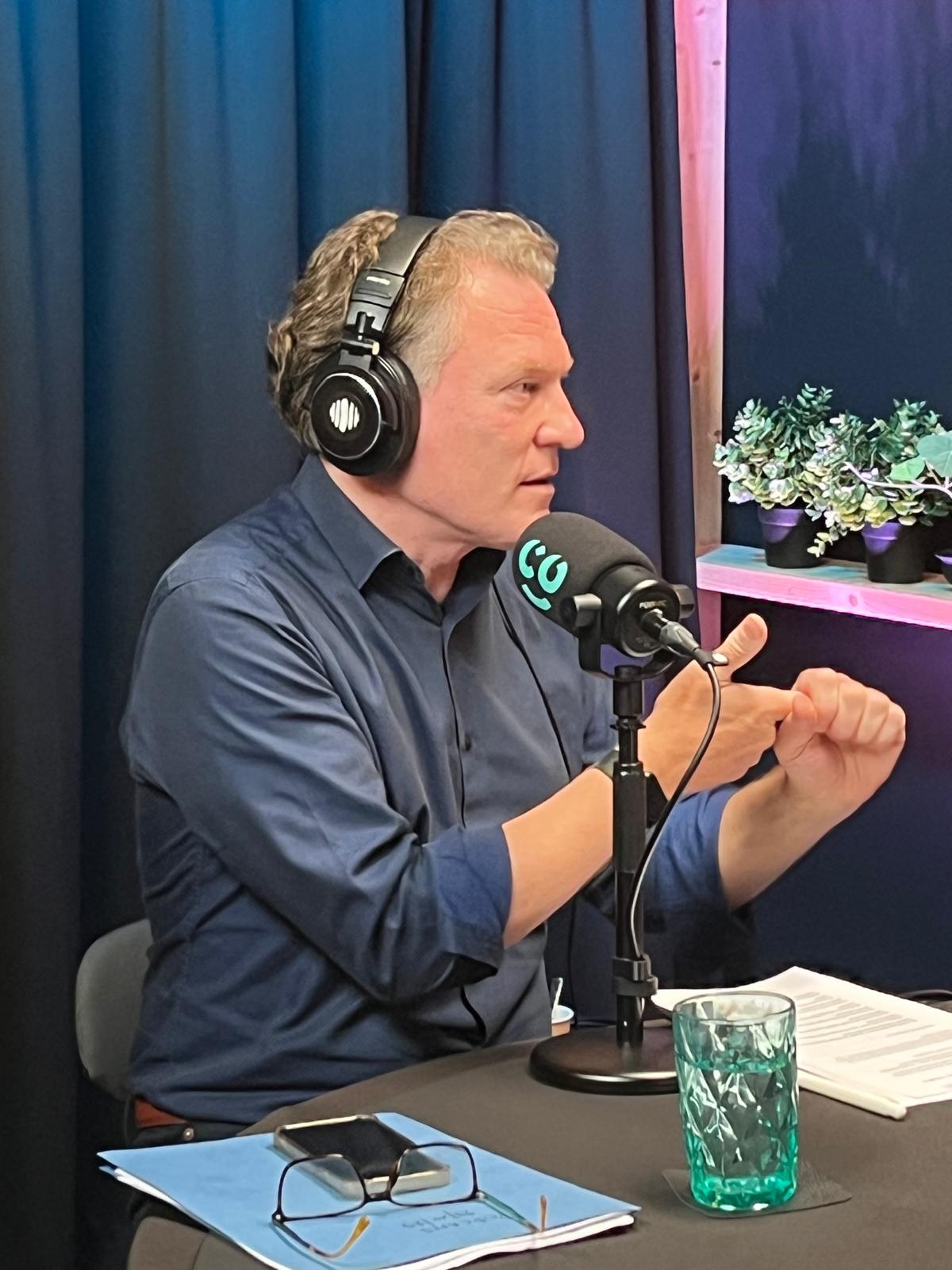 Bram De VosCEO, Hello Customer
Your host of CX Matters, the webinar and podcast series powered by Hello Customer, where every episode looks at one idea: the way you treat your customers shapes the way your business grows.
LinkedInWhy measuring rarely changes culture
How do you embed customer centricity as a way of working?
Organisations measure a lot: delivery times, response times, satisfaction scores and NPS, with dashboards everywhere. Often, measuring becomes an end in itself. It happens once a quarter, a box gets ticked, and it does not shape daily decisions, change behaviour or touch the culture.
This episode looks at what it takes to make customer centricity part of how an organisation works every day.
Leadership, everyone, and micro CX leaders
What does it take to embed customer centricity: leadership, or every employee?
Both. Leadership has to endorse it, live it and believe it, and because customer centricity is everybody's responsibility, it also has to take root throughout the organisation. It starts with a vision of what customer experience means for the strategy: an acquisition-focused business, for instance, needs that focus in its customer experience strategy too.
Customer experience creates value in three places. It adds value for the customer, delivers value for the organisation and strengthens the brand, and the first two need to stay in balance. Only leadership can set that direction; Joe at reception cannot do it alone. Yet everyone, on the front line, in finance or in marketing, has to live the promise. That is the role of micro CX leaders: people who understand what customer experience means for their organisation, take decisions on their own and bring the leadership's vision to life.
Think in capabilities: CX has no endpoint
In CX there is no endpoint. You cannot be customer-centric and be done with it. It is a moving target.
Michel StevensCX expert & course directorIs there a maturity curve for customer centricity?
Thinking in capabilities works better than thinking in maturity, because maturity suggests an endpoint, and customer experience does not have one. Like agile, it is something an organisation practises and believes in, never a state it reaches once and for all.
Customers change, competitors change and the organisation itself evolves. That also explains a common frustration: a team does a lot of work and its NPS barely moves. Often a stable NPS is good news, because it means the company is keeping up with its competitors or staying ahead of them.
From projects to second nature
If the target keeps moving, what milestones can teams work towards?
Organisations tend to grow through three phases. In the first, customer experience is a series of separate projects: one to improve the CRM, another to personalise communication on the website. In the second, those initiatives become standardised and something unites them. In the third, people live it. Moving from the second phase to the third takes far more than five days, or even five months.
A customer-centric culture exists when people are so deep in it that they no longer see the alternative. A recent discussion about claims management shows what that means in practice. There were valid practical reasons to extend claim processing to ten working days. From the customer's side the case looked different: customers want their problem fixed as fast as possible, and they want clarity about what to expect, in line with what the brand promises.
For a B2B company whose customers resell its products, the job to be done is to make those customers successful in their own business. Selling another unit of product X is secondary. Seen that way, a long claims process makes no sense, and that kind of thinking only appears in the third phase.
No mandate, no programme
If there is no mandate, there is no point in running it.
Michel StevensCX expert & course directorWhich customer experience projects are worth taking on?
Customer experience used to look like a grassroots movement: people on the front line could start it and push it through the organisation, persuading marketing and the other departments to join in. Practice shows otherwise. Customer experience needs a mandate from senior leadership.
That mandate is the first thing to check before starting. If the owners or the CEO do not believe in it and do not see the value of a good customer experience, good intentions will not carry a programme. Some people will prove that wrong; in most cases it is not worth the effort.
How to tell whether leadership really means it
How do you tell whether leaders really mean it when they say they are customer-centric?
Many leadership teams say they are customer-centric and believe it themselves. Finding out whether they mean it usually requires that it hurts somewhere: if they keep going when it hurts, they mean it. Too often, leaders who say they are all for customer centricity abandon their teams when push comes to shove, and that suffocates those teams.
The certainty only comes when the going gets tough, but there are telltale signs before that. The Lean Six Sigma habit of going to Gemba helps: go to the floor where customer interactions happen, or where things get made, and watch how a leader behaves there. Some act like tourists in their own organisation, spotting deviations from the script. Others come to listen and to understand before they reply. The second kind is credible, has the trust of the people on the floor, and will go all the way.
When the going gets tough: the returns fight
What does it look like when the going gets tough?
Long before e-commerce, a large customer service department ran a cumbersome returns process. Customers sent back a broken device and waited a long time to hear whether they would get a replacement or a refund. By then, many had already bought a competitor's device.
Changing it meant an epic fight with finance. The proposal was to ship a new device the moment the returned parcel was scanned at the post office. Finance feared customers would send in bricks or cinder blocks, and some did. For the vast majority of customers it was the right thing to do, and the decision rested on a gut feeling more than on proof. Small tests can help predict an outcome, but the answer is not always in the data. When the going gets tough, follow your gut and do what is right for the customer.
Training is a series of interventions
What works when you train people to be more customer-centric?
Training is a series of interventions, never a one-time event. It starts with what customer centricity means and how each person affects the customer experience, including people in finance who seem to have nothing to do with customers. Everyone either serves customers or helps the people who serve them.
After that comes repetition: reminders and nudges that show how to put what was learned into practice. The right thing also needs to be spelled out. Telling staff that the customer is always right, or that the customer is king, sets them up to fail, because everyone knows it is not true.
Good training is not prescriptive, and telling staff to say the customer's name three times will not create micro CX leaders. Those grow when people learn to hear what a customer is really saying and to balance value for the customer against the organisation's objectives. Train people well, explain why and course-correct along the way, and the culture follows.
Read the feedback, fix your top three
What role does customer feedback play in that process?
Feedback is vital. Some leaders read their customer feedback first thing every morning; one Belgian leader is open about doing exactly that, to understand what is on her customers' minds.
Feedback serves two loops. The inner loop is about the individual customer: what is the problem, and how do we solve it for them? The outer, tactical loop is about the themes that keep coming back. A simple discipline works: take the top three problems from the feedback, discuss them every week and keep going until they are solved, then start on the next three. Continuous improvement like this has to go hand in hand with a long-term vision.
Standing out from the average
The organisations that think about who they are, and what is important to them and to their customers, are the ones that will win.
Michel StevensCX expert & course directorWhat will change in customer experience over the next two to three years?
This may be one of the most exciting periods ever for customer experience, because organisations now have every piece of technology they need to make a real difference in people's lives.
Everyone else will disappear into averageness, because the average has become easy to reach. Social media shows it already, with comments that are clearly generated by AI. Saying honestly what you think, even when you are wrong, starts a real conversation, and it is in friction that you find diamonds.
Four questions to start with
What is one practical piece of advice for organisations that want to strengthen their customer centricity?
Start by assessing your capabilities with four questions.
| Capability | The question to ask |
|---|---|
| Skills | Does the organisation have the practical and technical skills to bring a customer experience to life, from applying the service recovery paradox to implementing new technology? |
| Willingness | Does it really want this, rationally and emotionally? The emotional reason is that serving customers well is the right thing to do; the rational reason needs a business case: more revenue, and more customers acquired and retained. |
| Ability | Do the processes let people do the right thing, and how will leaders remove the barriers? |
| Alignment | Does everyone mean the same thing by customer centricity, or by a customer journey? |
An organisation that has those four discussions, and knows how capable it is on each, can move further and faster than ever before.
Why customer centricity beats being the cheapest
What keeps someone excited about customer experience after so many years?
Optimism. Customer experience is about believing there is value in doing better for customers, and the alternatives are less attractive. A company can try to be the cheapest, but then it spends its days counting cents, and only one company can be the cheapest. It can try to have the best product, but competitors can catch up in an instant.
Customer centricity, ideally combined with a great product or with efficient use of resources, is the option that gives work the most meaning. Building the cheapest organisation in the world is no reason to get up in the morning.
This article is an edited summary of the conversation. For every word, watch the full episode in the video above, or click a section title to jump to that moment.
Questions this episode answers
What is a micro CX leader?
A micro CX leader is an employee who understands what customer experience means for their organisation, lives it in daily work and can make decisions on their own. Micro CX leaders carry the leadership's vision into the rest of the organisation.
Why does a customer experience programme need a leadership mandate?
Without senior leaders who believe in the value of customer experience, initiatives stall as soon as they need budget or a hard decision. Checking for that mandate is the first step before a programme starts.
Why does NPS sometimes stay flat after a lot of CX work?
Customers and competitors keep changing, so customer experience is a moving target. A stable NPS often means the company is keeping pace with its competitors or staying ahead of them.
How do you train employees to be more customer-centric?
Treat training as a series of interventions: explain what customer centricity means and how each role affects it, then keep nudging with reminders and course corrections. Avoid clichés such as "the customer is always right", which set people up to fail.
Which four questions should an organisation ask before a customer experience programme?
Do we have the skills? Are we willing, rationally and emotionally? Are we able, with processes that let people do the right thing? And are we aligned on what customer centricity means?